Need roof repair services in Tacoma?
Questions about a worn or storm-hit roof? Reach out and Beliefdropped Roofing will point you toward independent local providers in our network.
No obligationRoof Replacement Help in Tacoma and the Tacoma area
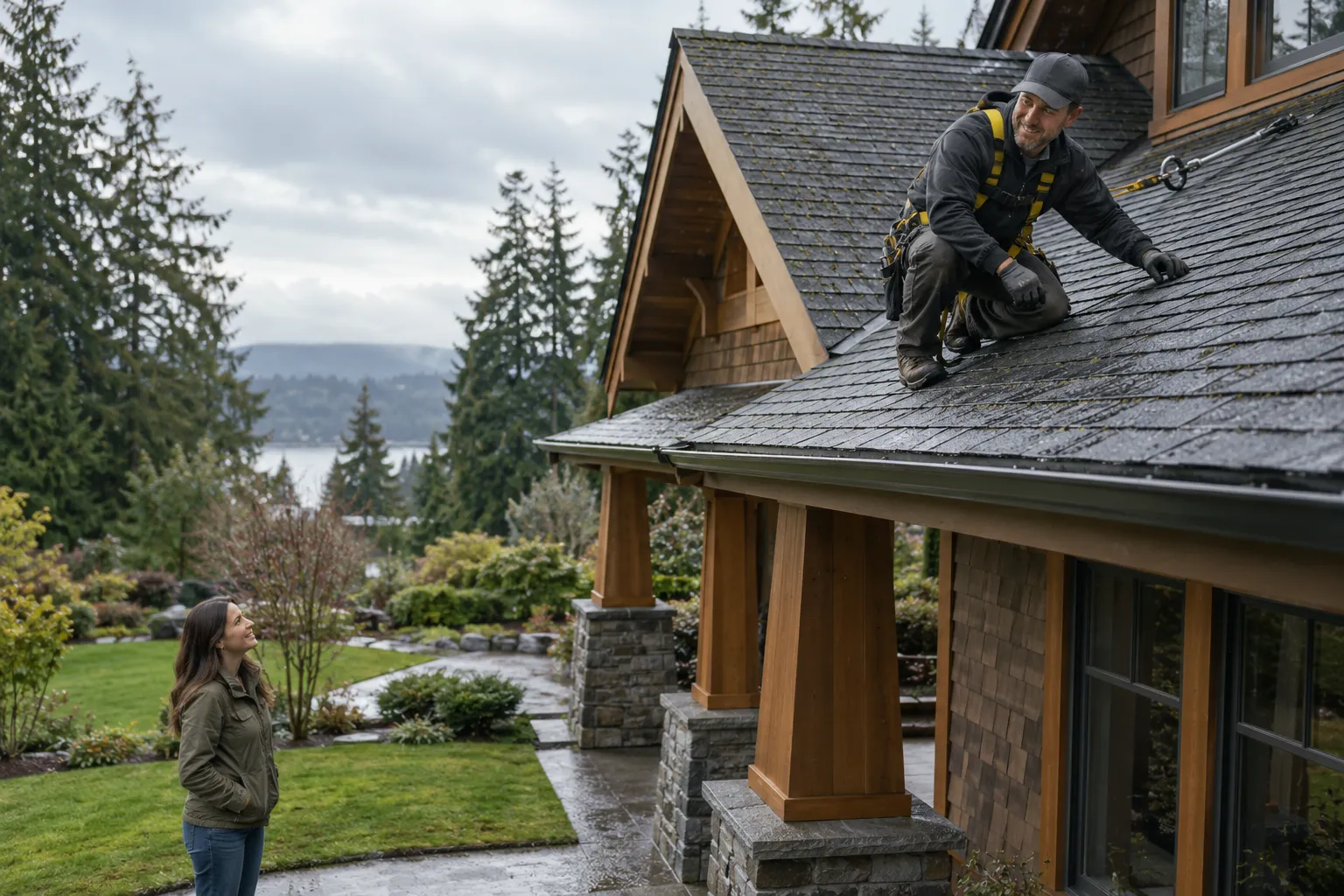
A roof problem feels big when water is coming in. The good news is that many repairs are small, and the first hour is mostly about staying safe and keeping track of what you see. This page walks you through that hour like a handy neighbor would.
Beliefdropped Roofing is a referral service. We do not climb roofs or do the repairs. We connect homeowners in the Tacoma area with independent local providers in our network who handle the work. You will learn what you can safely do from the ground, what a roofer looks for, how repair compares with replacement, and what to ask before you say yes to anything. Read it once now, so you know the plan before a storm hits.
Breathe, then document. A wet ceiling or a shingle in the yard is stressful, but it is rarely a reason to rush up a ladder. Wet roofs are slippery, and a fall causes far more harm than a leak does.
Start from the inside and the yard. Look, listen, and take notes. Then let a provider handle the climbing.
Work through this list in order:
Poke a small hole in a bulging, water-filled ceiling spot only if it is clearly about to give way, and catch the water in a bucket. Wear eye protection. Turn off power to a room if water is near a light fixture or outlet.
If you can reach the attic safely, peek in with a flashlight. Dark, damp wood or dripping insulation helps a roofer find the source faster.
Anything that needs a ladder, a steep slope, or a wet surface is a provider's job. So is a sagging ceiling, a smell of mold, or storm debris sitting on the roof. Do not walk the roof to "just have a look."
Water is patient. It slips under one lifted shingle, follows a nail down, and soaks the wood below. Wood-frame homes hold that damp for a long time, especially in a long wet season with steady rain.
Soon you can have stained drywall, soggy insulation, and soft decking. Moss and rot like these conditions. A quick patch often costs far less than the repairs that come after weeks of slow seeping.
Emergency roof repair usually means stopping water first, not finishing the whole job. A provider may tarp the damaged area or seal an obvious opening, then plan a lasting fix once the roof is dry.
Availability varies by provider and by how busy the weather has been. Many providers can respond quickly, and sending a request is the way to find out.
After a windstorm, scan from the yard. Look for lifted or missing shingles, bent flashing, fallen branches, and granules in the gutters. Do not drag limbs off the roof yourself.
Some policies may cover sudden damage, so check your policy. Providers can often help document damage for a claim, which makes your photos even more useful.
Most repair visits fall into a handful of jobs:
The wet spot on your ceiling is rarely right under the hole. Water travels along rafters before it drips. A roofer works backward from the stain, checking the attic, then the roof above it.
Expect a check of flashing, vents, valleys, and nail lines. Some use a moisture meter or a hose test. Ask them to show you photos of what they find.
A tarp, properly secured by a provider, can protect the roof for a short time. Inside, buckets and plastic sheeting protect your belongings. Roofing tape and sealant from the store are short-term fixes at most, and they are not a safe reason to climb up.
Treat any temporary fix as a bridge to a real repair.
A repair makes sense when damage is limited and the rest of the roof is sound. Replacement may fit when leaks keep coming back, shingles are brittle across the whole roof, or decking is widely soft.
After a big hailstorm, hail damage roof replacement can come up when bruising covers many slopes. Ask a provider to explain why they suggest one path over the other, and what each would involve.
Asphalt shingles are the easiest to patch. Metal roofs usually need fasteners or seams resealed. Tile and slate pieces can be swapped, but they need careful handling. Flat sections on townhomes depend on their membrane and drains.
Older craftsman houses may have layered roofs and tricky valleys, so ask whether the provider has worked on your roof type.
Moss holds water against shingles and can lift their edges. Heavy buildup is worth mentioning to a provider. Do not power wash it yourself, since that can strip protective granules and push water under the shingles.
Crawl spaces and attics also need airflow, or damp air can mimic a leak.
Good local roofing contractors are happy to answer plain questions. Ask about licensing and insurance in your state, and ask for these in writing. Ask who will be on your roof and how they protect your landscaping.
Be wary of anyone who pressures you to sign on the spot. Providers in our network are independent, so you stay in charge of the choice.
Ask for a written quote that lists the materials, the scope, the cleanup, and the total. Compare more than one if the situation allows. Prices vary by roof, region, and job, so treat any number you read online as a rough range.
A provider traces the stain back through the attic and roof surface to find where water actually enters.
Cracked, curled, or missing shingles get replaced and sealed to match the surrounding roof.
Worn seals around chimneys, pipes, and vents are a common leak point and get resealed or swapped.
Wind and hail damage can be tarped, patched, and documented with photos to support a claim.
Repair prices depend on roof type, pitch, access, and how much wood underneath is damaged. These are typical U.S. ranges only. Real numbers vary by job, so always get a written quote before work begins.
| Repair type | Typical range | Notes |
|---|---|---|
| Minor shingle repair | $150 – $500 | A few shingles on an easy-to-reach slope |
| Flashing repair or reseal | $200 – $800 | Chimneys, walls, and skylights cost more |
| Pipe boot or vent seal | $150 – $450 | Common cause of small leaks |
| Leak inspection | $100 – $400 | Often applied to the repair if you proceed |
| Storm damage patch or tarp | $300 – $1,500 | Depends on the size of the damaged area |
| Decking section repair | $500 – $2,500 | Rises when rot has spread beyond one spot |
Keep off the roof, protect your belongings, and take photos and notes of every sign of damage.
Request a callback to check provider availability, or use the request form to describe what you see.
A provider inspects the roof, explains the cause, and lays out repair choices in writing.
Pick the quote that fits, confirm the scope, and let the provider schedule the repair.
You get clear, step-by-step help for the first stressful hour, written in simple words you can act on.
We lay out repair and replacement paths so you understand choices before anyone starts.
You are connected with independent local providers in our network who do the actual roof work.
Requesting an estimate carries no obligation, so you can compare and decide at your pace.
Questions about a worn or storm-hit roof? Reach out and Beliefdropped Roofing will point you toward independent local providers in our network.
No obligationQuestions about a worn or storm-hit roof? Reach out and Beliefdropped Roofing will point you toward independent local providers in our network.
No obligation